This article only covers Delhi, Agra, Jaipur, Ranthambore and Pushkar – the places I visited – but for the sake of brevity I will refer to this trip as “my time in India.” Apologies to the rest of India for any generalizations I make. If there’s anything you think I got totally wrong, let me know!
I recently spent eight days traveling around northern India at the invitation of an Indian friend visiting her home country (she lives in Canada now). I’m a novice when it comes to international travel, and prior to this trip had never been to a “developing” country. Naturally, I spent hours reading and watching videos about the region, but that research did not adequately prepare me for the actual adventure of being there.
India as I experienced it was a land of extremes.
Extreme heat, extremely spicy and spice-heavy food, extreme kindness from strangers, extremely impressive sights (Taj Mahal lived up to the hype) and equally extreme poverty and pollution. I absolutely enjoyed some parts of my trip and loathed others.
My time in India was an overwhelming sensory experience in ways I’ve never encountered traveling the U.S. and other western countries, so I thought it would be fun to break down my trip thusly: Sights, Tastes, Smells, Sounds, and Touch.
- Part 1: Sights (Taj Mahal, Temples, Ranthambore National Park)
- Part 2: Tastes (Favorite Restaurants)
- Part 3: Smells (Pollution, Bathrooms, Spices)
- Part 4: Sounds (Honking, Animals, Music, Solicitation)
- Part 5: Touch (Heat, Clothing, Food Poisoning, Reflections)
- An Adventure for the Senses (Final Thoughts)
Part 1: Sights
When I speak to foreigners visiting the United States, I like to ask what made them decide to visit my country. What bucket list sights convinced them to buy a plane ticket to cross the ocean? Common answers are:
- New York City
- Los Angeles / Hollywood
- The Grand Canyon
- Las Vegas
- Niagara Falls
Wait, Niagara Falls!? That place just down the road from where I grew up?
It never ceases to surprise me just how pervasive the image of Niagara Falls is in countries outside of the U.S., especially in tourists from India. For us Americans it is certainly a well-known natural phenomenon, but I don’t think it captures the imagination or tops bucket lists like it seems to have done for many foreign visitors.
This is obvious if you actual visit the place. It is crawling with camera-snapping international vacationers speaking all manner of languages, many of whom traveled far out of their way to visit. All I can say is, kudos to the Niagara Falls marketing team!
I would like to propose that the Taj Mahal is to American tourists what Niagara Falls is to many Indian tourists. It is THE place to go. If you visit India, you visit the Taj Mahal. Plain and simple.
So, I visited the Taj Mahal. It was very, very cool. Somehow, this 370-year old mausoleum manages to live up to its monumental hype.
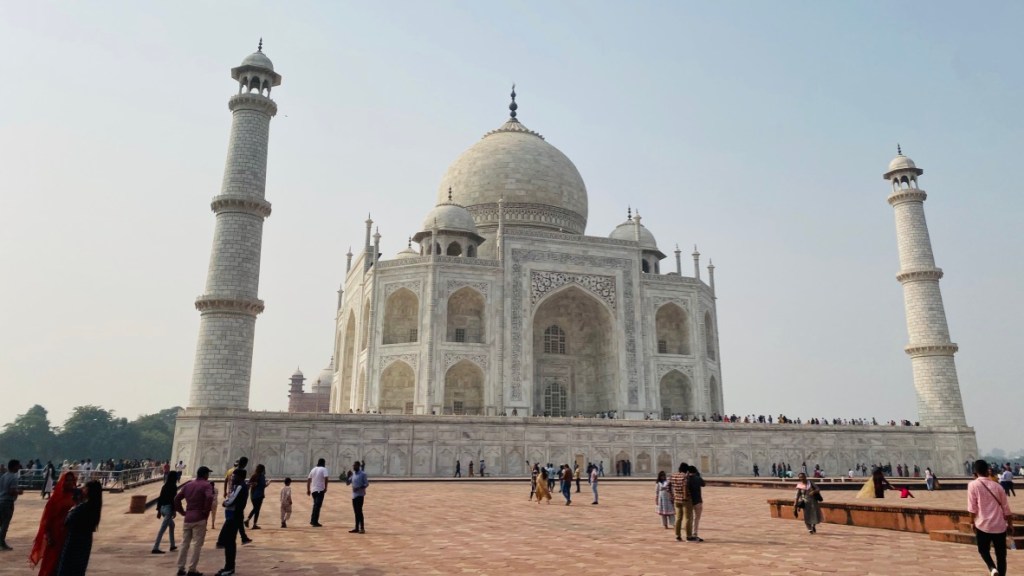
Commissioned by the Mughal emperor Shah Jahan in 1631 to honor his late wife, this ivory-white marble wonder and surrounding complex of structures took some 20,000 craftsmen and approximately 22 years to construct. Since then it has become widely recognized as an architectural masterpiece with a reputation drawing 6 million annual visitors from around the world.
Overall, it is beautiful and extremely impressive, and was certainly a jewel of my trip.
That being said, it was not the only jewel!
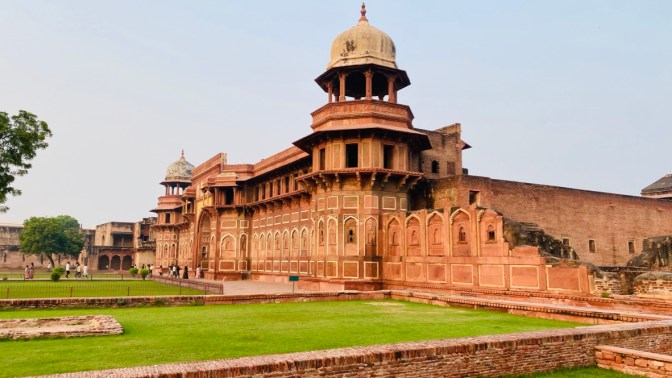
The Agra Fort (near to the Taj Mahal) is also quite remarkable, much less crowded, and has ruins perfect for exploring and photography. It is frequented by flocks of bright green parrots that add plenty of ambiance.
The Lotus Temple in Delhi can get busy, but it is 100% worth the visit. It was the most peaceful place I visited during my trip, an impressive feat considering how loud and crazy Delhi can be.
Architecturally, Jaipur – known as the “Pink City” after the predominantly pink color of its buildings – has some worthwhile sights to see as well. The City Palace, home of the Jaipur royal family and former ceremonial and administrative seat of the Maharaja (ruler) of Jaipur, is home to several museums and interesting architectural sights. Stop by the nearby Hawa Mahal as well for a photograph in front of its beautiful pink and red facade.
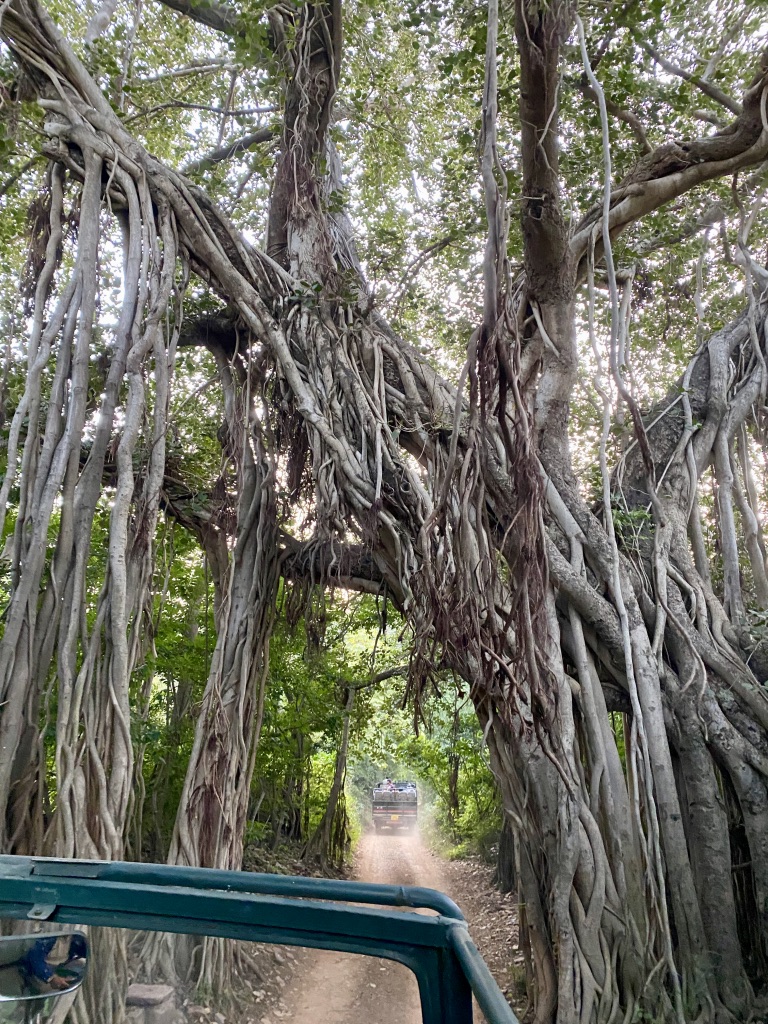
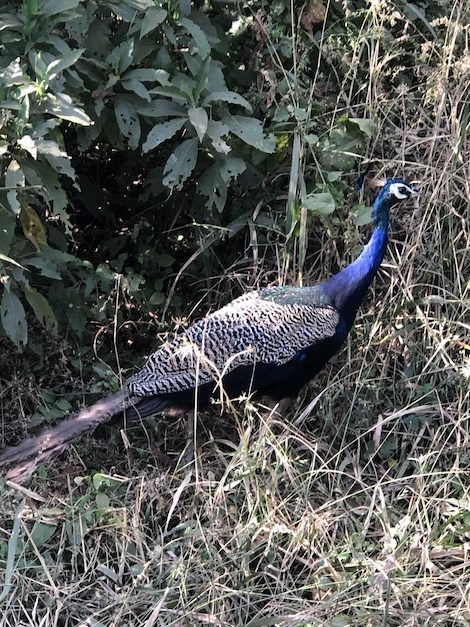
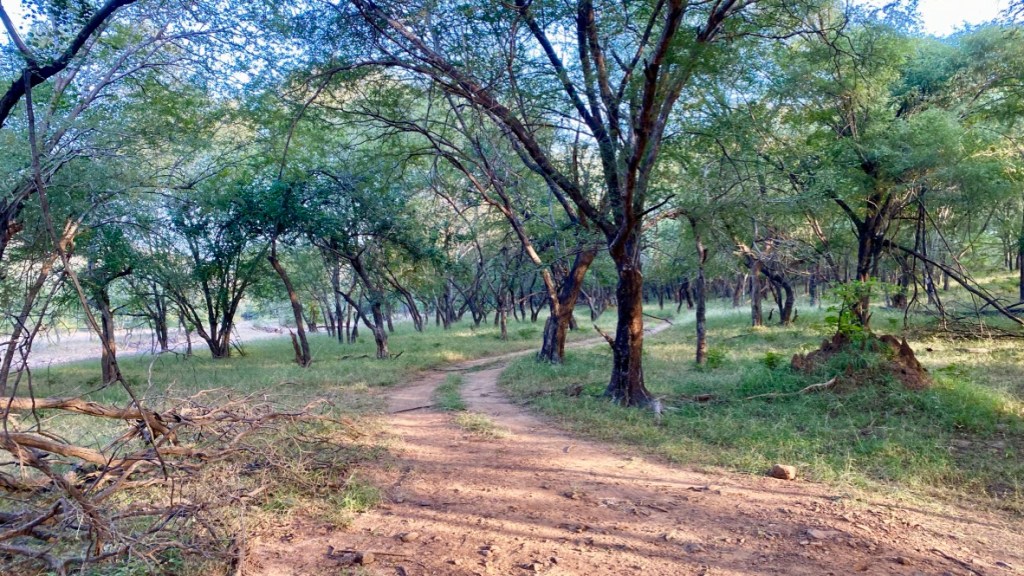
We made an effort to stray from the cities, too, and were not disappointed in Ranthambore National Park where a safari took us deep into the forest for an afternoon of wildlife spotting.
Peacocks stole the show here – dozens of them, as plentiful as turkeys are in the U.S. Gangs of monkeys, playful and agile, jumped through the trees and kept a watchful eye as we drove by. Wild boar, huge deer and a bear also made appearances. The park also has tigers, which proved elusive during our trip, though they are spotted quite often (we just got unlucky).
If you plan to travel to India, I highly recommend getting out into nature at least once – and Ranthambhore is an excellent choice!
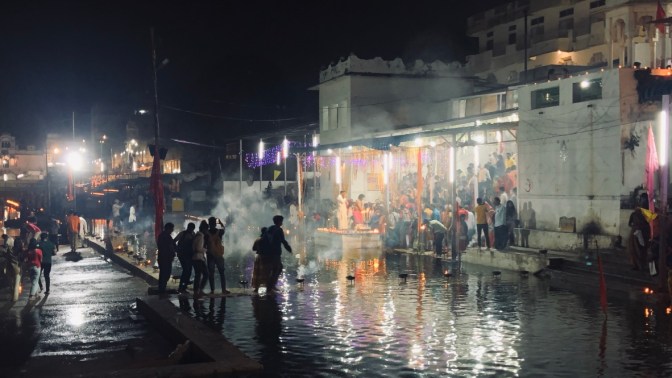
Religion is an undeniable part of Indian culture, and seeing the numerous and busy temples was central to our trip.
A barefoot walk through Gurudwara Bangla Sahib in Delhi garnered insight into the Sikh religion and a history of its place in Indian culture (all tourists receive a free lecture from a guide).
The Lotus Temple is part of the Baháʼí faith, but styles itself as open to “people of all racial, religious, [and] national backgrounds.” Whilst there, I heard sermons and songs from several completely different religions. The line to get in is long, but moves fast. Once inside, you’ll find peace and tranquility.
A day trip to Pushkar will find you at the foot of the Brahma Temple, one of the only existing temples dedicated to the Hindu god Brahma in all of India. At night, we witnessed the Pushkar ghat aarti ritual unfold here, overlooking the sacred water of Pushkar Lake.
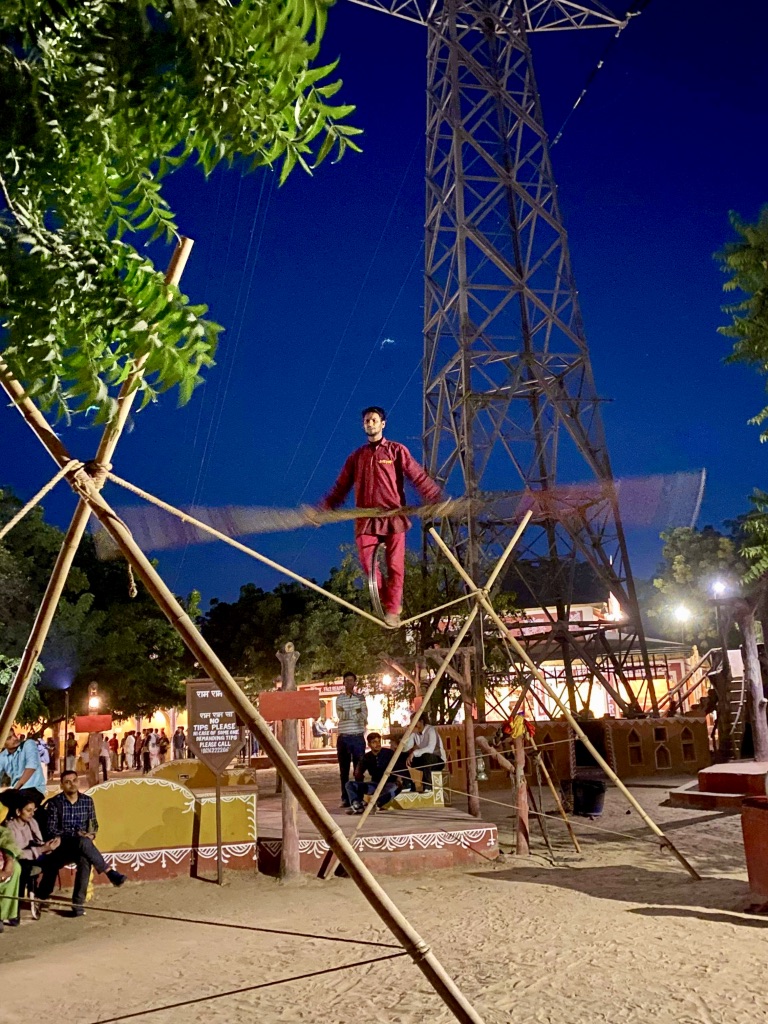
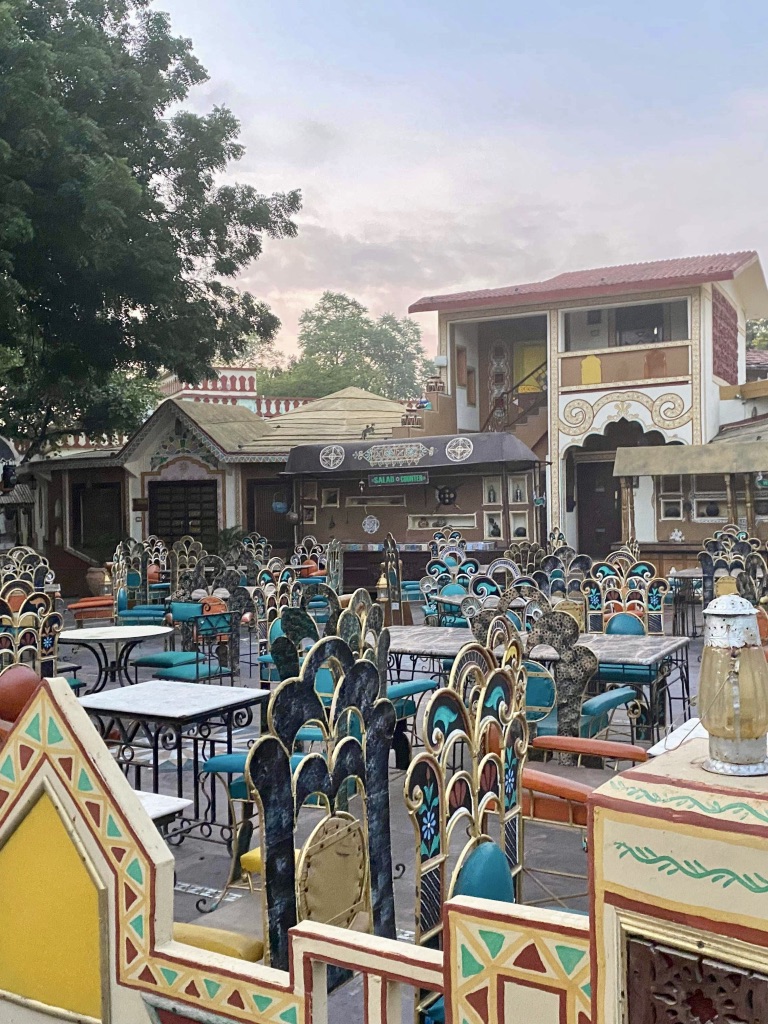
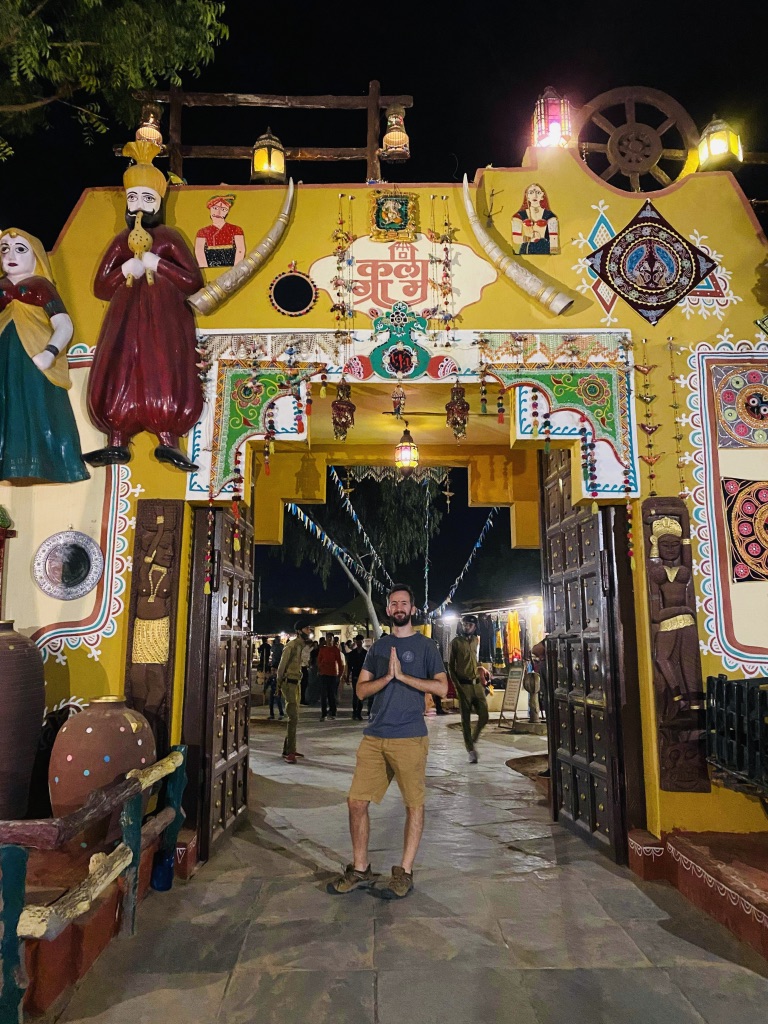
One place we visited that is completely out of character for me was Chokhi Dhani Ethnic Village Resort, a five-star resort located just outside of Jaipur. I’m usually not one to partake in life’s fancy excesses, but my Indian friend highly recommended we see what a luxury resort looks like in India. At only $50 USD per person per night, I thought, why not?
It turned out to be an absolute delight, and a great (although sanitized) way to experience Indian culture. The resort is huge and beautiful, and has a nightly carnival on its grounds dedicated to showcasing various Indian experiences. Normally, I hate sanitized experiences – but after the chaos and wildness of city life, it was a welcome change of pace. Highly recommend!
Part 2: Tastes
Where I grew up (Buffalo, NY, USA), knowledge of India’s tourist offerings is scant, and I think often boils down to two things: the Taj Mahal, and oh-my-god amazing Indian food.
And yes, it was amazing.*
*But to my surprise, it wasn’t so over-the-top amazing that it put American Indian food to shame. We ate out at a dozen different restaurants during our India trip, and many were on par with authentic Indian restaurants I’ve dined at in America. But, there were a couple that really did knock it out of the park. I dream of them often.
Also, I recognize some of you may chide me for ignoring the undoubtedly-wonderful street food in these Indian cities, but not everyone in our party was comfortable with it so we made a group decision to stick to restaurants. I hope to try it on my next trip!
From velvety, creamy curries to garlicky naan and spices so intense it’ll have you coughing yet still going back for more, the food on our trip around India was by far one of the biggest highlights.
My three favorite restaurants on this trip were as follows, in rank order:
1) The Salt Cafe, Agra
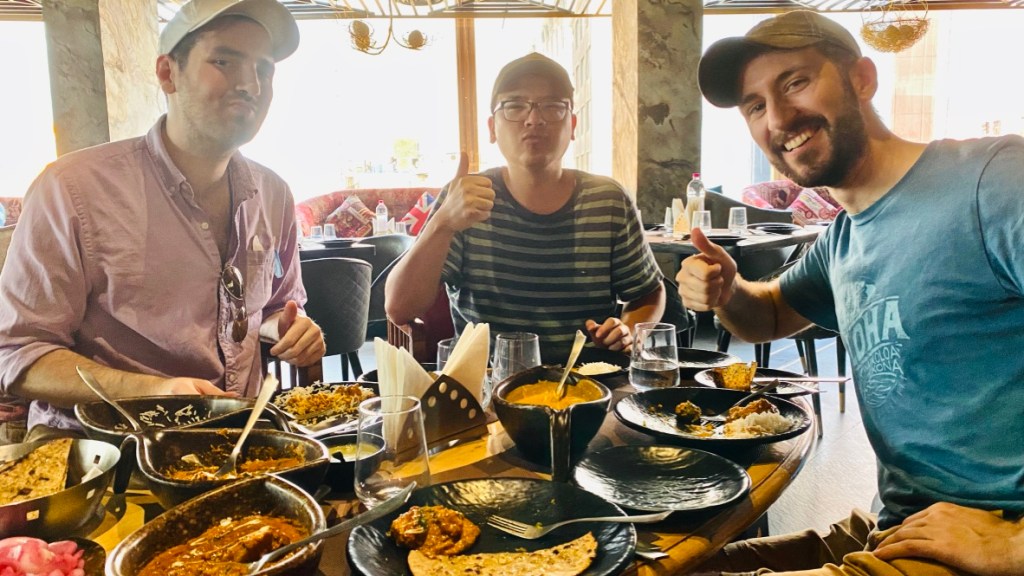
This restaurant styles itself as “The Best Restaurant in Agra” – and just like every coffee shop in New York has “the best coffee in New York,” I was skeptical. But man, they delivered.
This was by far the best Indian food I have ever eaten, hands down, full stop. My Indian friend ordered a litany of curries, breads and a whole bunch of stuff I don’t remember the name of. Every single one was either great or amazing. It also seemed to be very sanitary compared to many restaurants we visited, which was a concern we had throughout the trip.
It was expensive compared to the typical Indian restaurant, but the total still only came to around $11 USD per person. I would happily go out of my way to pay that again for the experience we got. Highly recommend!
Bonus – it’s within driving distance of the Taj Mahal.
2) J U G G E R N A U T, Delhi
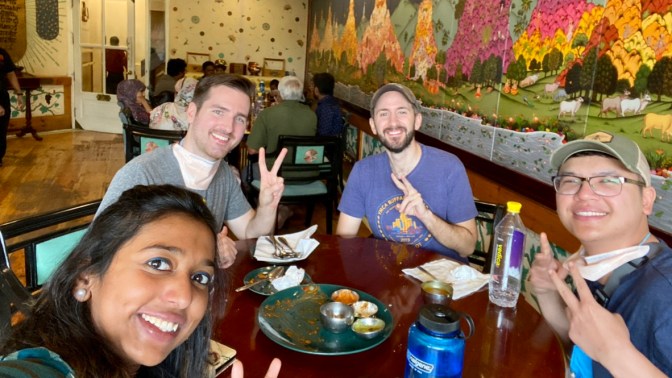
That’s no typo, they just prefer a lot of spaces in their name. We ate here on Day 1 of our trip, and man was it a great introduction to authentic Indian cuisine! This vegetarian-only establishment was my favorite restaurant in Delhi. They have a laid-back family atmosphere and a wide variety of Dosai, Uttapam, Idli and other dishes, of which we ordered a healthy variety.
I’m not sure where the restaurant got its name, as it seemed pretty strange given the lovely, down-to-earth decor, but after a couple bites here I stopped questioning anything about them. It was so good we forgot to take photos before devouring our meals. Definitely worth a stop if you find yourself in the capital.
3) Govindam Retreat, Jaipur
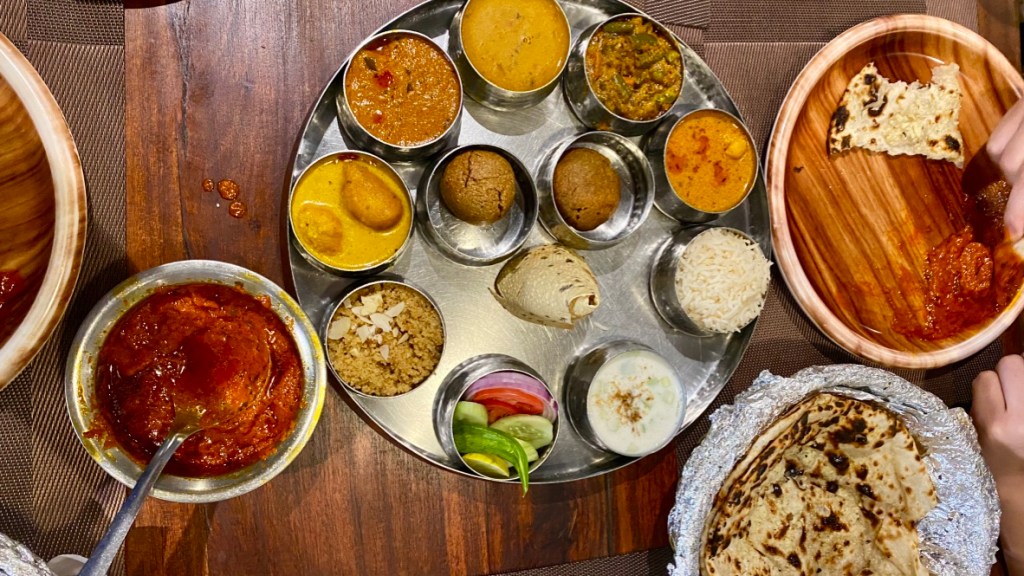
Upon arriving in Jaipur we were excited to get some Rajasthani food, and Govindam Retreat delivered masterfully. The food was great, but the decor and ambiance really solidified this place as a favorite of mine. They also had a phenomenal live music performance during our lunch, with two impressive musicians. For dessert we had their special rose laddu.
The restaurant is conveniently located a short walk from the City Palace and Hawa Mahal. Definitely worth a stop if you are visiting those places.
Part 3: Smells
As I mentioned, there were things I loved about my time in India… and things I loathed. This, unfortunately, is one of the latter.
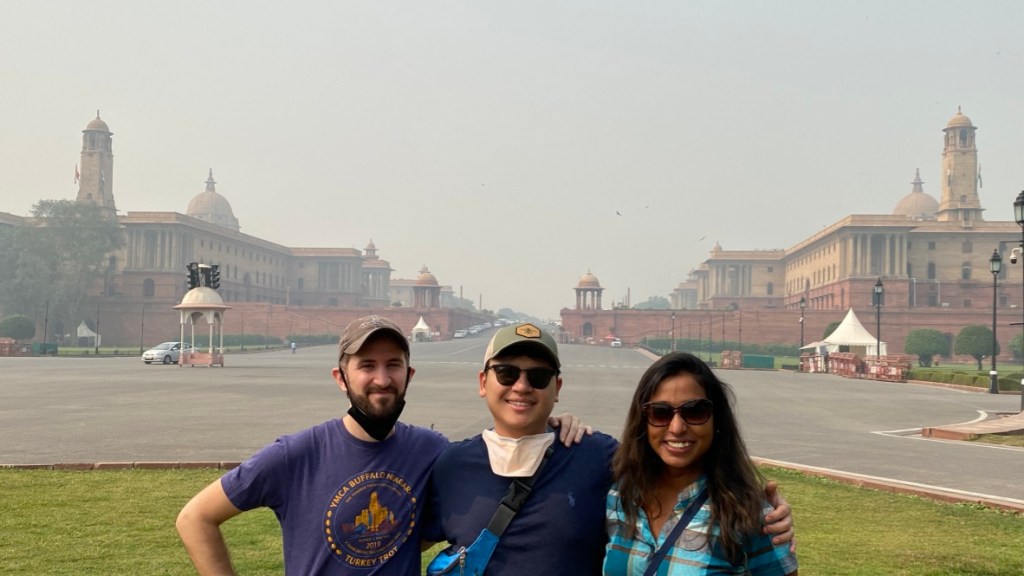
I would be doing a disservice to all travelers if I didn’t warn about the pollution and garbage present in nearly every part of India I traveled to, but especially in Delhi.
Air pollution in Delhi is far more intense than anything I have experienced in the Western world. It is the first thing you will notice leaving the airport, and you will not be able to forget about it for as long as you are outside. The smell is choking and permeates your clothes, hair and anywhere not deep indoors. On a windy day it can sting your eyes. One day the smog was so dense we could almost stare directly at the sun.
Masks were our friend in dealing with this. They help with the smell, and at least give you the illusion of breathing in less of it.
Garbage was a big issue as well, prominent in every park, creek, city street and small-town neighborhood we visited. Throughout our travels, it seemed each outdoor nook and cranny had piles of plastic, paper and other debris. I witnessed wide-spread garbage burning on front lawns for the first time, which was shocking. The smell can be nauseating. India has some amazing experiences for those willing to explore it, but be prepared for this too.
Bathrooms were also a trying component of our trip. While public bathrooms in the U.S. are less than stellar, most of the ones we experienced in India – and even ones at some restaurants – set a pretty low bar. The worst was probably on the train from Agra to Jaipur, which my friend (bless his soul) had to endure multiple times as he was coming down with food poisoning.
My suggestion? Hold your nose and bring baby wipes, they are your friend.
I should say, there were also some good smells too – the food, as I mentioned, was excellent and the aroma of rich curries and spices often wafted through the streets. Stroll through the markets or visit a temple and you may smell sweet incense burning as well.
Despite the constant smells that permeate Delhi and other areas of the country, if you are able to get past them, there are so many bright spots to explore. My recommendation? Limit your time in Delhi. Although smog is present in both Agra and Jaipur, it is far less intense and more manageable.
Part 4: Sounds
There’s a hidden language in India, common to many of the locals, that anyone who visits will almost certainly come across. It’s not Hindu, or Telugu, or Urdu.
It’s the language of honking. As in, car horns. And my god, it is nonstop!
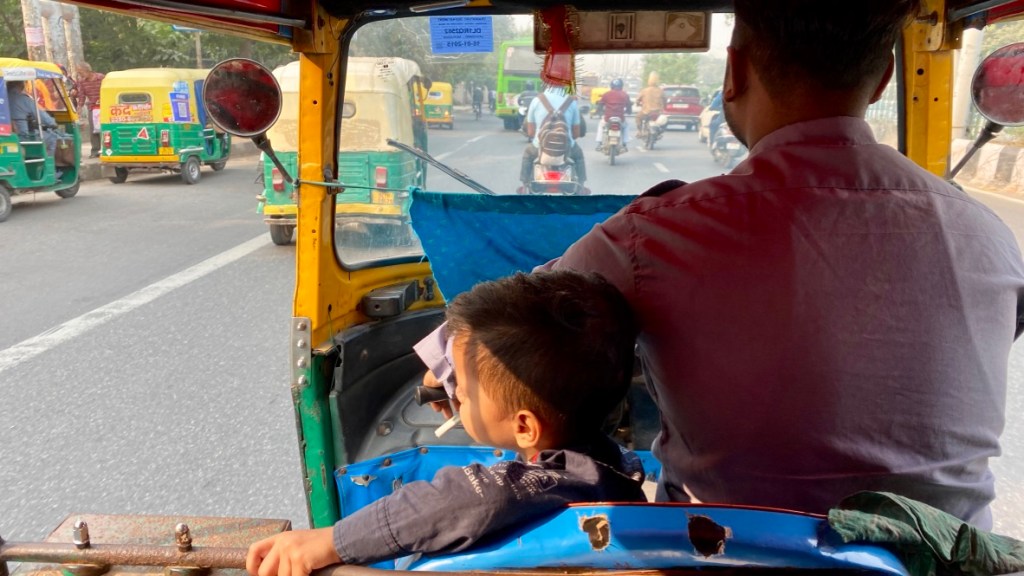
Every car, nearly at all times it seems, is honking.
In the United States, a car horn usually means “Stop!” In India, it seems to mean, “Hi, how are you?” To which everyone all at once replies, “Lovely, and you?”
In all the major cities and towns we visited in India, this language was always playing out in the background. If you’re just walking around, it is a bit annoying. If you are driving or riding around in a car or auto rickshaw, it is downright terrifying. But after a few days, you simply get used to it, as I’m sure most Indian people have. It becomes part of the everyday background noise. For me it turned into an amusing cultural quirk, fun to observe and try to make sense of.
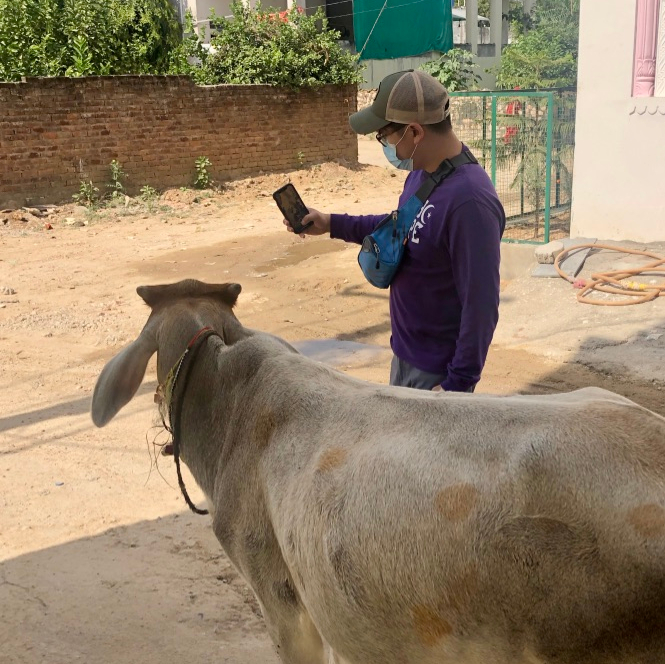
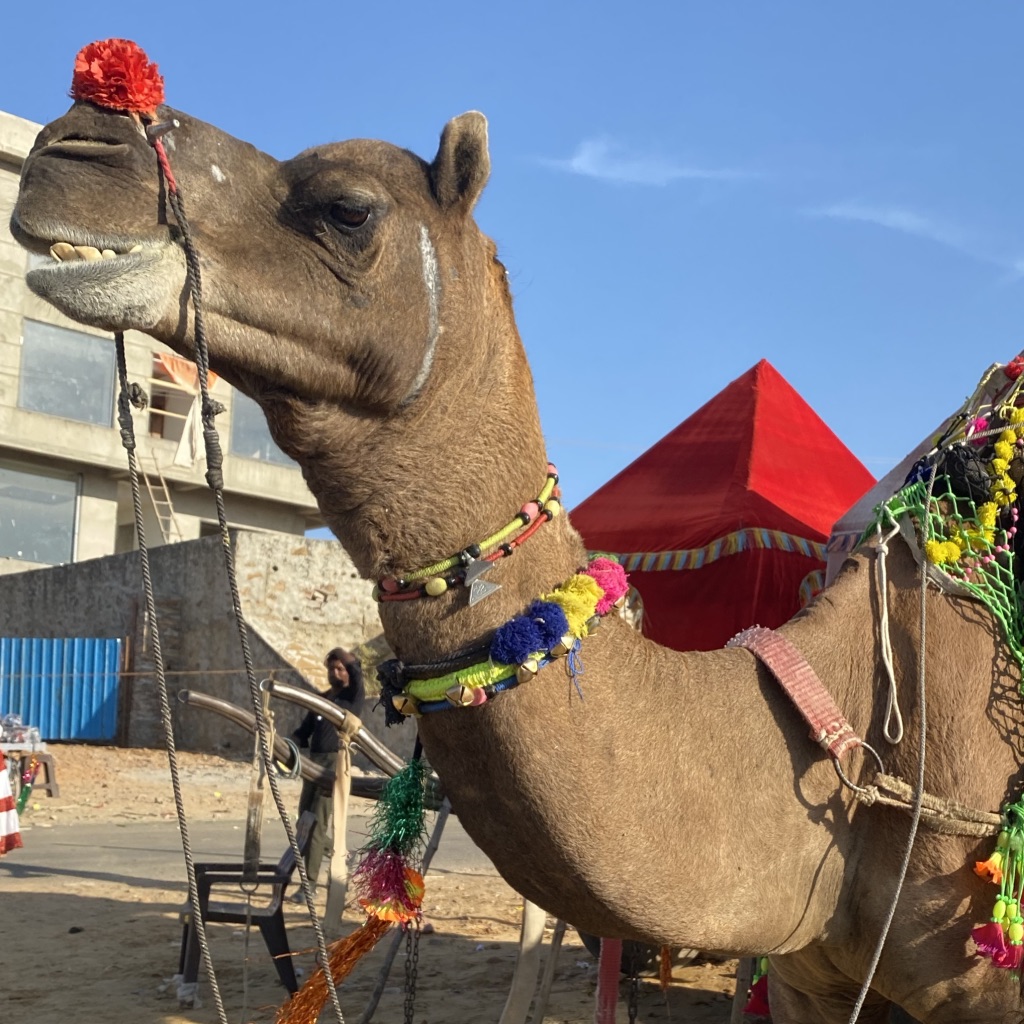
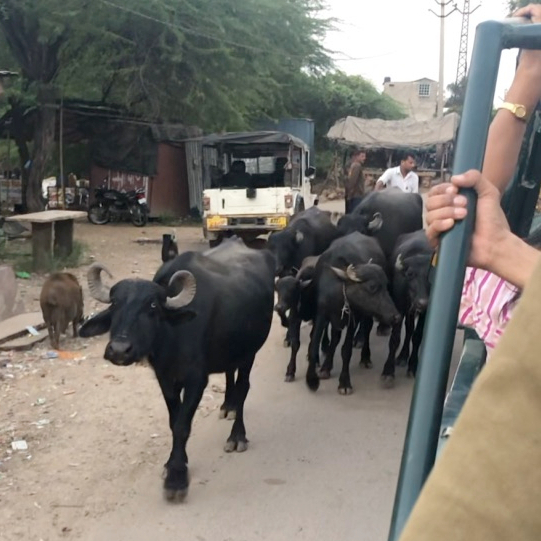
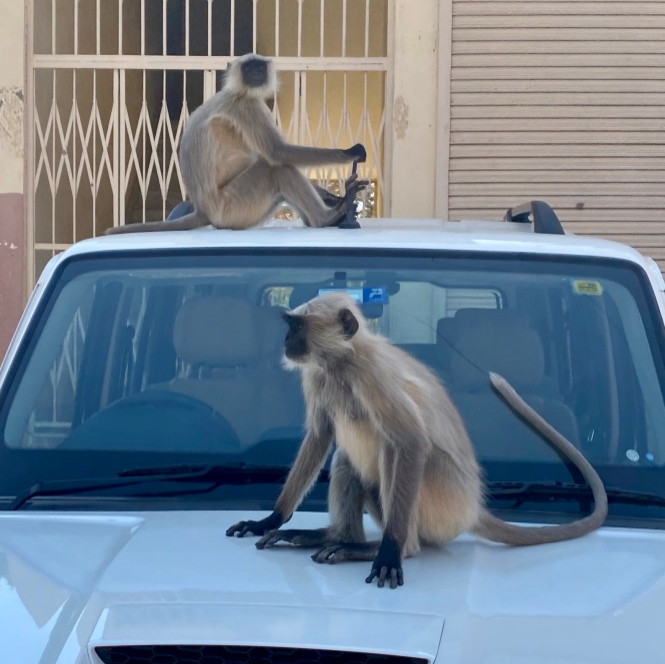
Another layer of the sonic backdrop of our trip were animals. Scores of colorful birds, herds of buffalo, families of monkeys, lone cows and stray dogs…animals are absolutely everywhere in India. In the cities, in the small towns, and of course in the wild – each adding their own set of noises and language to the cacophony. Listening for, and pointing out, various unusual (to Americans) animals become a favorite pastime during our trip.
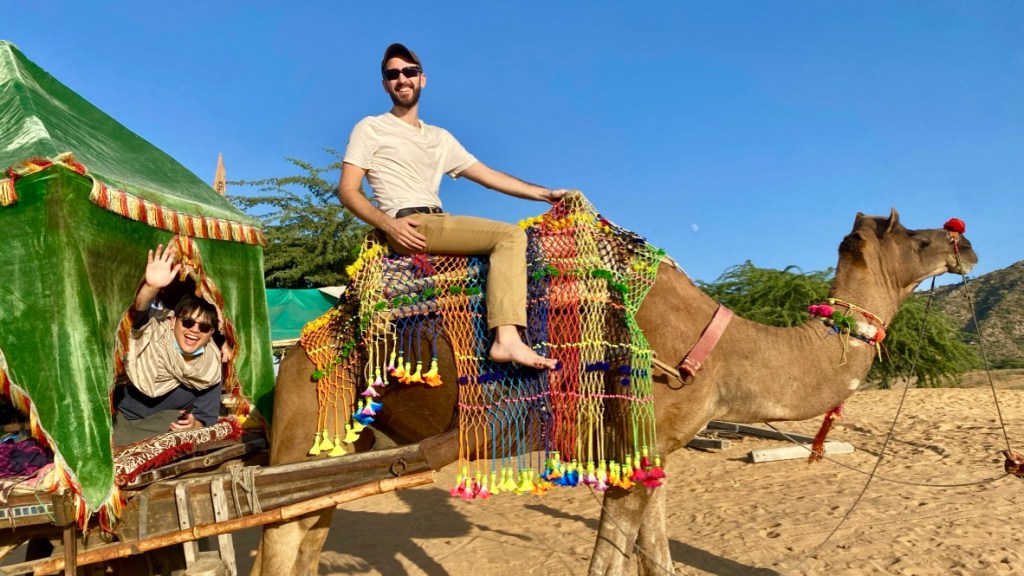
Music was not a focal part of this particular trip, so I didn’t get to hear as much as I’d hoped. But between the live music at Govindam Retreat, traveling bands at Pushkar Camel Fair and snake charmers outside City Palace in Jaipur, it added joyfully to the ambiance and reminded me, every time, that I was somewhere new.
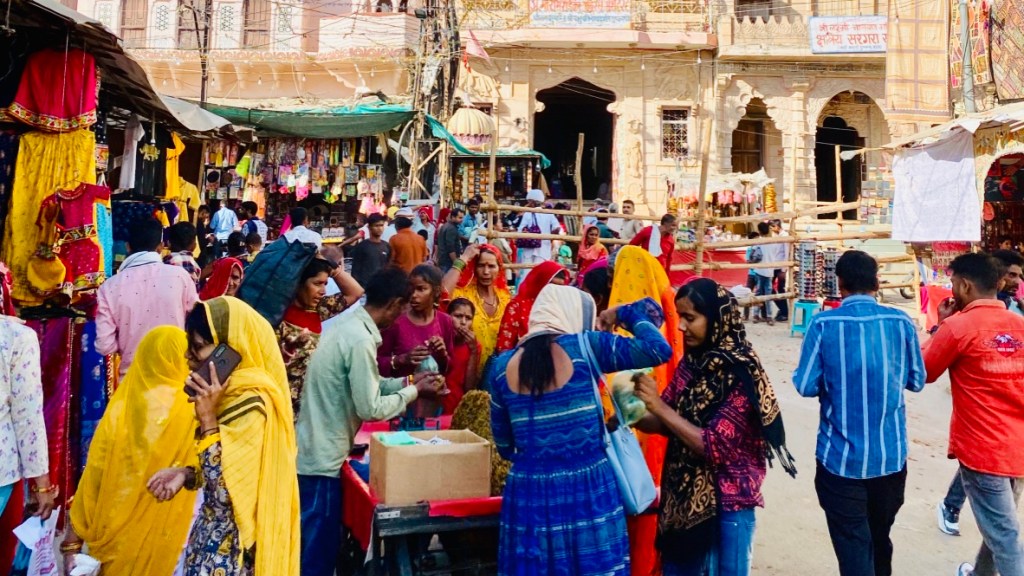
Of course, people make plenty of noise too – and a chorus of chatter followed everywhere we went, as it does in any part of the world. Something new to me, however, was the sheer amount and intensity of solicitation we experienced in the shopping districts and popular tourist locations.
I’m someone who considers myself open to new ideas and ways of living and doing things. I’m not an “America is the best at everything” type of person.
But the constant solicitation we experienced was an overwhelmingly negative part of my Indian experience.
It was exceedingly difficult to shop anywhere without a crowd of men verbally berating you – sometimes aggressively – to enter their shops, or hire them as a guide, or steer you in a certain direction.
At times, it bordered on stalking – in Pushkar, we had a man follow us for 10 minutes trying to get us to pay him to show us around.
In some areas, it genuinely spoiled the experience of the site we were trying to visit. Even in the center of the Taj Mahal, there were seemingly-nice “guides” who would walk up to you and start explaining the history of the structure, and then demand tips from you (and get angry if you didn’t pay or didn’t pay enough).
According to my Indian friend, the fact two out of four of us were white definitely exacerbated this. To paraphrase her words, “They just get really excited when they see a white person – to them, it is the best opportunity to earn a living and so competition gets fierce and some people go overboard.”
We all developed a thick skin pretty quickly from these encounters, but it was still exceedingly annoying. All in all, this is one area in which I think the West does tourism better.
Part 5: Touch
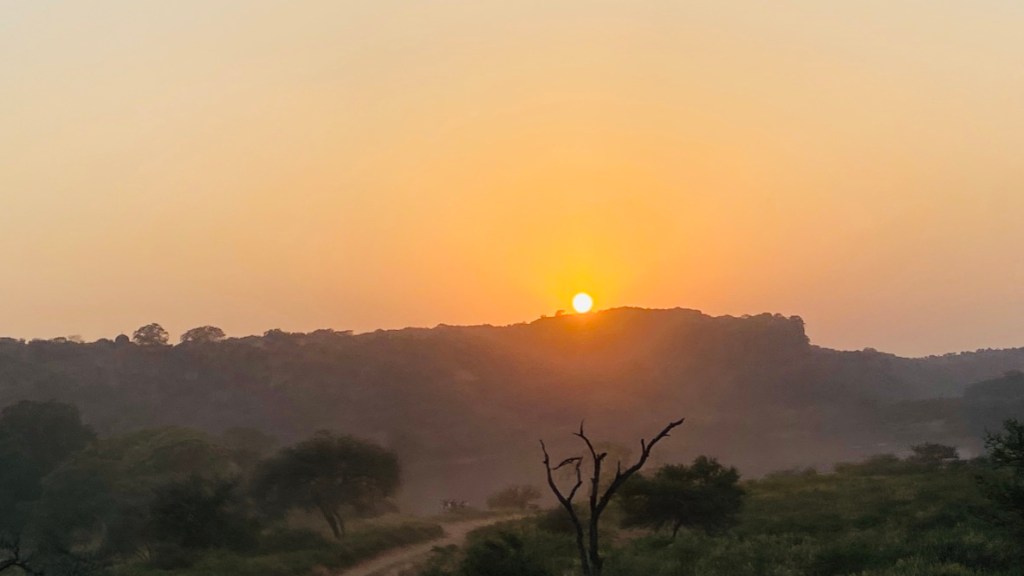
India is an undeniably hot place. We traveled there in late fall, and it was still quite sweltering during the day. It was a kind of omnipresent heat that sticks with you everywhere you travel.
Knowing this I packed mostly shorts, and one pair of just-in-case long pants. That was a mistake.
Apparently, shorts just aren’t really a thing adults wear in India (or at least the areas I visited). Everyone, and I mean everyone – wears long pants and on top of that, men mostly wear button-up long-sleeve shirts. This trend was so ubiquitous that we even made a game out of trying to spot the one person in the crowd NOT wearing long pants.
I was not expecting this cultural quirk, and at first I was worried I would stand out wearing my shorts and t-shirt. But then I was reminded that I’m white, and I would stand out regardless of my clothing length, plus apparently people don’t care what clothing foreign men wear. Crisis averted.
According to my Indian friend as well as subsequent googling, this seems to boil down to both a sense of modesty and protection from the elements – mainly the scorching sun and mosquitos. Fair enough. I ended up joining the locals in this custom and wore my one pair of long pants almost every day. It always helps to bring just-in-case pants!
Besides the heat, there’s another way India managed to reach out and “touch” me that’s worth mentioning.
Food poisoning.
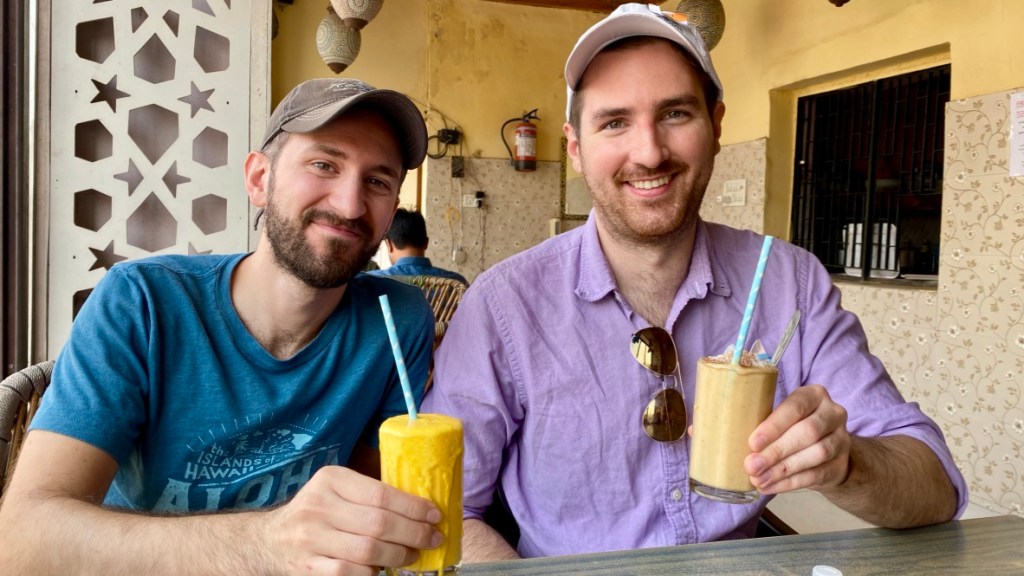
The infamous Delhi Belly reached out its gnarly hand to pat me on the stomach during my last day. Thankfully, it was a fairly mild version as food poisoning goes, but one of my friends wasn’t as lucky (as I mentioned, he got it bad, and on a train, no less). Still, it was no bueno. I suffered stomach cramps and “other” symptoms I prefer not to mention here for my entire 35-hour trip home.
The culprit? A suspiciously room-temperature lassi served to me at a tiny family-owned restaurant (see above photo). I don’t think I’ll ever look at a lassi the same way again.
Because “touch” could be interpreted as emotional as well as physical, I’ll finish with a reflection on how my time in India made me feel.
Firstly, I am so thankful for the quality of life and amenities I take for granted in the U.S. Things as simple as food hygiene at restaurants and safe tap water, which I’ve never had to even think about growing up in America, were suddenly huge anxieties in India. Infrastructure like clean streets and clean air and proper garbage disposal seem like a given in New York, but in Delhi and other areas they were very much absent. To have been born into this country is such a blessing, even with its flaws.
Secondly, I was reminded on more than one occasion how the power of kindness can completely shift your perspective on a place or a people. Although I mentioned the constant solicitation we often faced in touristy spots, outside of those areas the opposite was often true. I was constantly struck by the willingness of the Indian people to help.
Simple things like giving directions, or a friendly smile and wave, or someone eagerly trying to assist us despite a language barrier, made me feel welcome and safe. It inspired me to think about how I treat strangers on the street in the U.S., and to try and give them the same experience whenever I have the opportunity. Such kindness can make anywhere feel suddenly special.
Lastly, my skin color has never been made so apparent to me than on this trip. Everywhere I went, the random smiles or stares I got from complete strangers reminded me that I looked different from everyone else.
Being white did afford me some novel experiences, but not all were positive. I often got to skip lines at tourist locations, but I also had to pay mandatory “foreigner prices” that were usually exorbitantly higher.
Random strangers in the street often smiled and waved at me, and at popular tourist spots dozens of people asked for photos simply because I was white. I thought this was weird and a little uncomfortable, but for the most part people were respectful. At the same time, though, there was the uneasy feeling of always being watched – of countless eyes staring at me from strangers in the street – mostly curious, but with some scowls mixed in.
I imagine this is a common experience for many people in the world, but it was a first for me.
An Adventure for the Senses
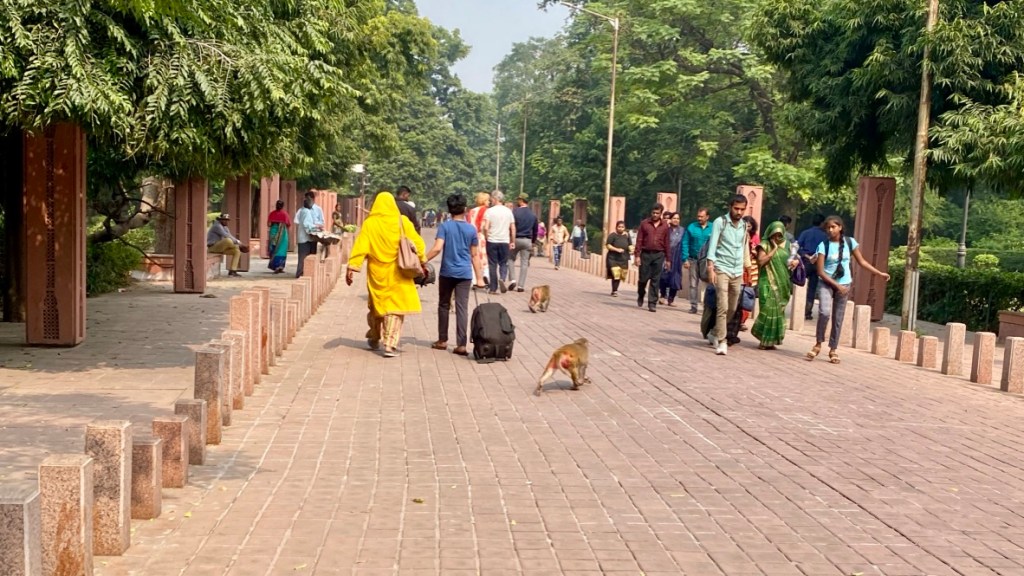
Ultimately, my time in India was absolutely wild. There were so many positive and negative experiences, but it all felt authentic and new to me, which is exactly what I was hoping to feel.
When you travel seeking adventure as opposed to relaxation, you take the bad with the good. It’s not all candy and rainbows, as advertisers and influencers may portray. But it is real.
Adventure travel, to me, is not simply about having fun (although that is a big component!). It’s also about observing and interacting with the world around you and seeing what happens. Then, reflecting on those experiences to try and glean some understanding of humanity, the world and your place in it. By that standard, this India trip was a complete success.
And while it may be a while before I find myself in India again, I do think I will return. India is huge, and I only experienced a sliver of what it has to offer. But until that time comes, what I did experience has given me much to reflect on.
And for that I’m grateful.
If you’ve made it this far, thank you so much for reading! Here’s an imaginary cookie. 🍪 If you have any thoughts or recommendations for my next trip to India or elsewhere, please let me know in the comments below. Cheers!


The food looks yummy!!!hahaha!
After reading ur article, make me wanna to go India in future one day.
BTW , you guys looked so happy and cute! 🙂
LikeLike
Thank you, Pei! We had a great time overall (Sean may disagree though, I’m not sure lol). The food was so dang good… the best Indian I have ever eaten for sure!
LikeLike